Dungeons & Dragons Dice Explained
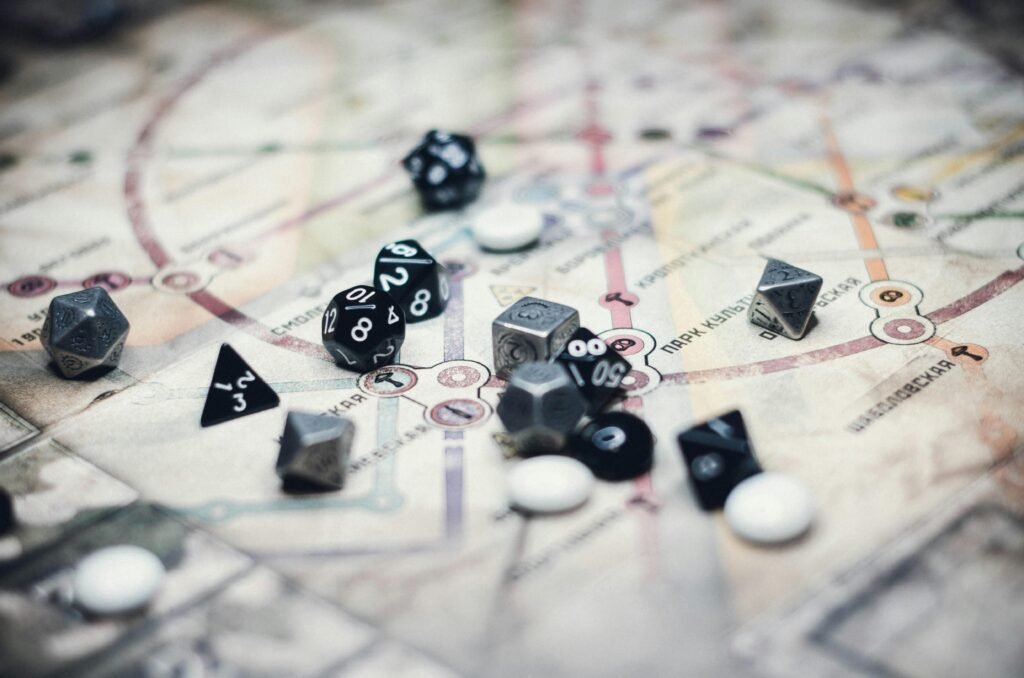
Dice play a central role in Dungeons & Dragons, helping determine the outcomes of actions like skill checks, attacks, and saving throws. The game uses a set of seven different dice, usually sold together as a single dice set. Below, we’ll break down what each die is used for and when you’ll roll it.
If you don’t remember what each die does, don’t worry — that’s completely normal. The official rulebooks will usually tell you which die to roll, and you can always return to this guide to quickly identify each one.
Dice & What They’re Used For
D20
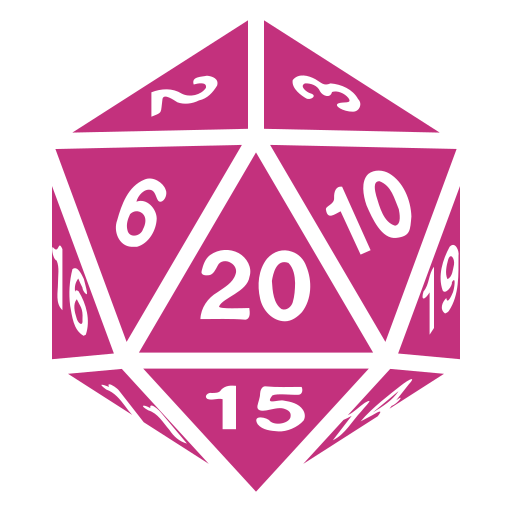
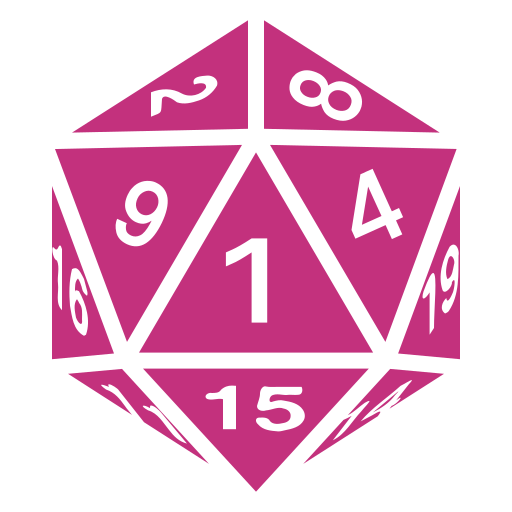
The 20-sided die (d20) is the most important die in D&D. Rolled when a player tries to do something such as:
Attack an enemy
Persuading a character
Sneaking past a guard
Using a skill
D12
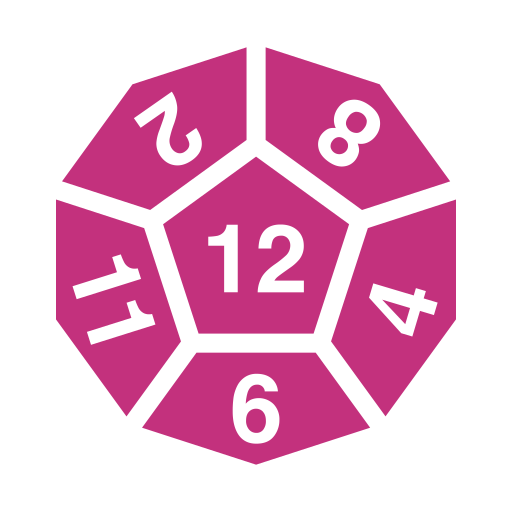
The 12-sided die (d12) is used less often but usually represents strong attacks or abilities. It’s often associated with:
Powerful weapons
Strong character abilities
Certain monsters’ attacks
D10/100
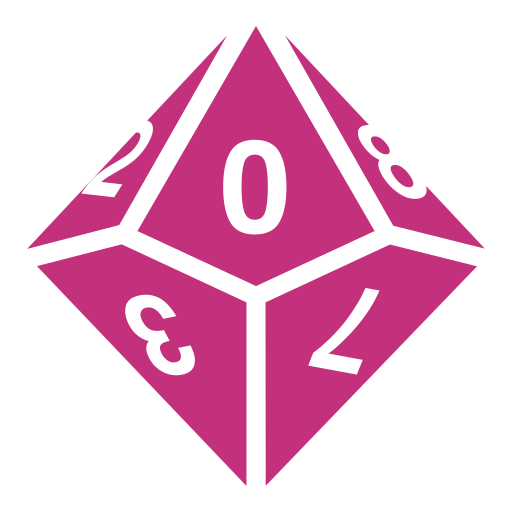
The 10-sided die (d10) handles damage and effects, while two d10s create percentile rolls (1–100), used for:
Weapon damage
Spell effects
Special abilities
D8
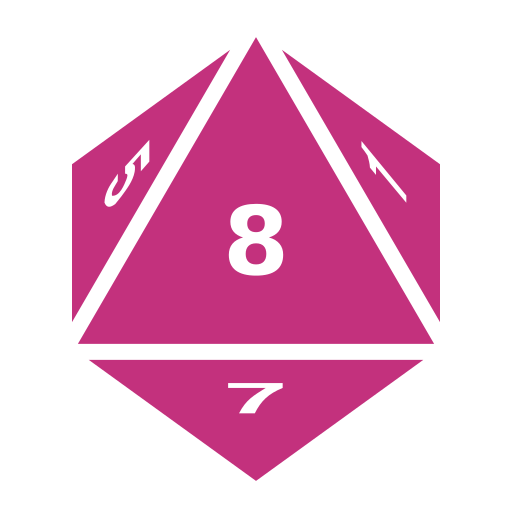
The 8-sided die (d8) is frequently used to determine:
Weapon damage
Spell effects
Healing amounts
D6
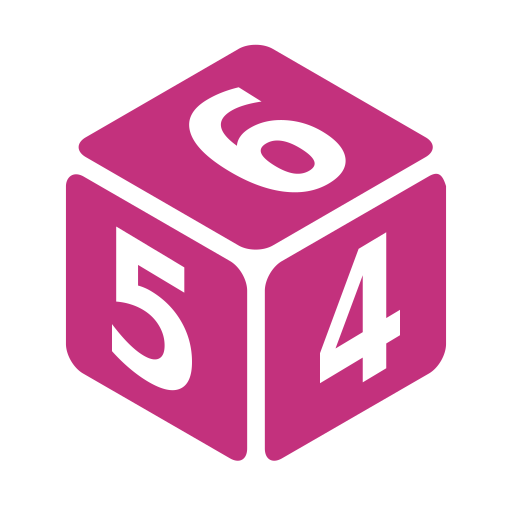
The 6-sided die (d6) looks like a standard die from board games. In D&D, it’s used for:
Weapon damage
Character abilities
Healing and effects
D4
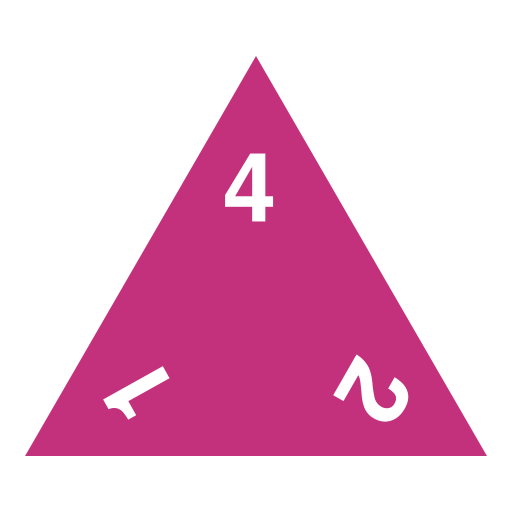
The 4-sided die (d4) is the smallest and most unique-looking die. It’s often used for:
Minor damage
Small bonuses
Certain spells and abilities
Most dice are used to determine damage, healing, or bonuses during play. For example, a longsword deals 1d8 damage, while a healing potion restores 2d4 hit points. In these cases, you simply roll the listed dice and add the results together to determine the total effect.
That said, the d20 is the die you’ll roll the most. In the next section, we’ll break down the different ways the d20 is used mechanically in the game.
Rolling The D20 In D&D: Attacks, Saves, Checks, & Advantage Explained
Core D20 Rolls

Attack Rolls
Roll a d20 and add your attack modifier; if the total meets or beats the target’s Armor Class (AC), you hit and then roll damage.

Saving Throws
When you’re resisting a harmful effect, roll a d20 and add the relevant modifier; meet or beat the DC to avoid or lessen the impact.

Skill Checks
When attempting something uncertain, roll a d20 plus your skill modifier and compare it to a DC set by the DM to see if you succeed.
Difficulty Class

Difficulty Class (DC) is the target number set by the Dungeon Master that you must meet or exceed on a roll to succeed at a task. lower DCs like 5 represent very easy tasks, while higher DCs up to 30 reflect extremely difficult or near-impossible challenges. To attempt it, you roll a d20, add the relevant modifier, and compare the total to the DC.
| DC 5 Very Easy | DC 10 Easy |
| DC 15 Medium | DC 20 Hard |
| DC 25 Very Hard | DC 30 Near Impossible |
Critical Success & Failure

Rolling a natural 20 or a natural 1 represents the two extremes of the d20—like opposite sides of a coin. A nat 20 is the best possible outcome, often leading to powerful attacks or triumphant moments, while a nat 1 is the worst, usually resulting in an automatic failure and sometimes a humorous mishap. These rare rolls add excitement and unpredictability to the game, reminding players that anything can happen when the dice hit the table.
Critical Failure (Nat 1)
A critical failure, also known as a natural 1 or “nat 1,” occurs when the d20 lands on 1 before modifiers are added. On attack rolls this results in an automatic miss, no matter how high your bonuses are, and it’s often the perfect excuse for the DM to describe a funny or embarrassing mishap.
Critical Success (Nat 20)
A critical success, often called a natural 20 or “nat 20,” happens when you roll a 20 on the d20 before adding any modifiers. On attack rolls this usually means a critical hit, allowing you to roll double the damage dice, often leading to big, cinematic moments at the table.
- Attacking a prone or restrained enemy
- Hiding and attacking before being seen
- A spell or ability grants it (Help action, Faerie Fire)
- Certain class features (Barbarian Reckless Attack)
- Attacking while you can’t see the target
- Making a ranged attack while an enemy is next to you
- Poisoned, exhausted, or blinded condition
- Attempting a task you are ill-equipped for
Modifiers & Bonuses

Modifiers: Training & Abilities
In Dungeons & Dragons, most rolls include modifiers and bonuses that come from your character’s abilities, training, or equipment. After rolling the dice, you add the relevant modifier from your character sheet to determine the final result.