In-Depth D&D Character Creation Guide (Rules, Stats, and Builds)
This guide focuses on the mechanics of building a character in Dungeons & Dragons. If the overview guide helped you choose your race, class, and character concept, this section shows you how to translate those choices into the numbers and stats on your character sheet.
If you’ve looked at a character sheet and wondered things like “What does initiative mean?”, “How do I calculate my hit points?”, or “Where does my attack bonus come from?” — this guide will walk you through it step by step. By the end, you’ll understand what each section of the sheet represents and how all the numbers are calculated.
Generate Ability Scores
Your ability scores determine what your character is naturally good at and serve as the foundation of your character’s abilities. Because they influence so many parts of the game, they are typically the first step in character creation. The six abilities are:
To generate your six ability scores, roll four six-sided dice (4d6), add the highest three results, and ignore the lowest die. Repeat this process until you have six numbers to assign to your abilities. Some groups also choose to reroll very low results, though this depends on your Dungeon Master and the rules your group decides to use. Once you’ve generated all six ability scores, refer to the chart below to determine their ability modifiers.
| Score | Modifier |
|---|---|
| 10-11 | +0 |
| 12-13 | +1 |
| 14-15 | +2 |
| 16-17 | +3 |
| 18-19 | +4 |
When assigning these scores, try to place your highest numbers in the abilities most important to your class. For example, a barbarian benefits most from a high strength, while a wizard relies heavily on intelligence. If you’re unsure which abilities matter most, it’s helpful to check your class description in the Player’s Handbook, which outlines the key abilities for each class.
Apply Racial Bonuses
After generating ability scores, apply the bonuses from your race:

Elf
Graceful and long-lived, elves are known for their agility, keen senses, and natural connection to magic or nature.
Bonus: +2 Dexterity

Tiefling
Tieflings have infernal ancestry that often grants them natural charisma and magical ability.
Bonuses: +2 Charisma, +1 Intelligence

Dwarf
Dwarves are tough, resilient people famous for their endurance, craftsmanship, and strong traditions.
Bonus: +2 Constitution

Human
Humans are versatile and adaptable, able to succeed in nearly any role or class.
Bonus: +1 to all ability scores
Record Your Proficiency Bonus
Every character has a proficiency bonus, which represents their training and experience. At level 1, all characters start with +2, You add this bonus when rolling for things your character is proficient in, such as:

Skills
If you are proficient in a skill (like Stealth or Perception), add your proficiency bonus to the skill’s ability modifier when making checks.

Saving Throws
Some classes grant proficiency in specific saving throws, allowing you to add your proficiency bonus when resisting certain effects.

Weapon Attacks
If you are proficient with a weapon, add your proficiency bonus to the attack roll when using it.

Spell Attacks
Spellcasting classes add their proficiency bonus to attack rolls made with spells.
Your proficiency bonus increases as your character levels up, representing their growing mastery and experience.
Choose Skill Proficiencies
Your class and background determine which skills you are proficient in. Common skills include:

Stealth
The ability to avoid detection

Athletics
Physical activity requiring power & stamina

Persuasion
Influence through diplomacy, negotation or charming someone
Skill modifier : ability modifier + proficiency bonus (if proficient). Proficiency is only added to skills your class is proficient with.
Calculate Hit Points
Each class has a hit die, such as:

D6
For Wizards
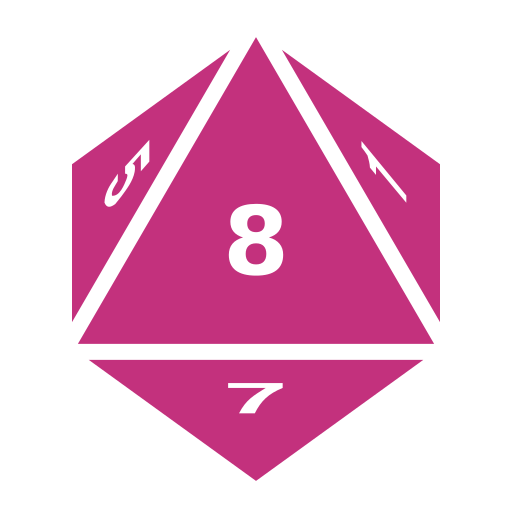
D8
For Rangers

D10
For Fighters
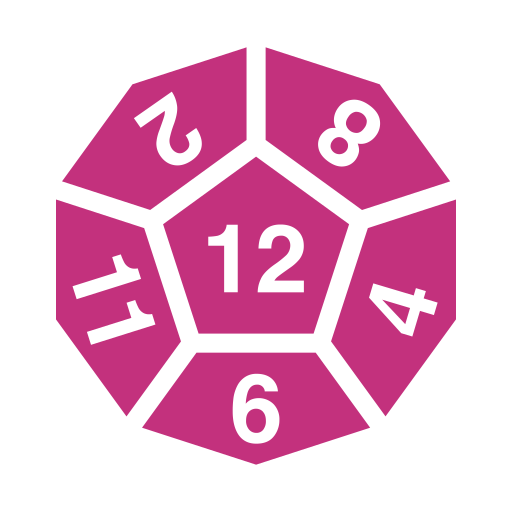
D12
For Barbarians
Example (wizard): max hit die = 6, constitution modifier = +2, total HP = 8.
Determine Armor Class
Your Armor Class (AC) represents how hard you are to hit in combat.

Armor class formula: 10 + dexterity modifier
Certain items can increase the base value or add bonus armor, such as:

Scale Mail
14 AC + Dex modifier (max 2)

Shield
+2 AC

Ring Of Protection
+1 AC and +1 to saving throws
Your final armor class reflects the combination of your agility, equipment, and any magical protection you have.
Calculate Attack Bonus
When attacking, you roll a D20 and add your attack bonus.

Weapon attack formula: D20 + ability modifier + proficiency bonus
Which ability you use depends on the weapon:
Melee Weapons
Strength modifier

Ranged Weapons
Dexterity modifier
Calculate Damage
Damage usually equals:

Weapon damage die + ability modifier
Longsword
1D8 + strength modifier
Bow
1D8 + dexterity modifier

Scimitar
1D6 + dexterity modifier

Greataxe
1D12 + strength modifier
Record Saving Throws
Saving throws represent your ability to resist harmful effects.
Saving throw formula: ability modifier + proficiency bonus (if proficient)
Each class grants proficiency in two saving throws.

Wizard
Intelligence
Wisdom

Fighter
Strength
Constitution
Ranger
Strength
Dexterity

Cleric
Wisdom
Charisma
Initiative
Initiative determines turn order during combat.

Initiative formula: D20 + dexterity modifier
Higher results act earlier in combat.
Spellcasting (For Magic Classes)
Spellcasting Ability

Classes that use magic have a spellcasting ability
Classes that use magic have a spellcasting ability, which determines how effective their spells are. The ability used depends on the class. For example, a wizard uses Intelligence to cast spells, while a cleric uses Wisdom. This ability affects both your spell attack bonus and your Spell Save DC.

Spell Attack Bonus
Some spells and cantrips, such as Witch Bolt or Ray of Frost, require a spell attack roll to hit a target.

Spell Save DC
Other spells require the target to make a saving throw instead of you making an attack roll.
Spell Attack Bonus: spellcasting ability modifier + proficiency bonus
Example: A wizard with a +3 Intelligence modifier and +2 proficiency bonus has a +5 spell attack bonus. They roll a D20 and add their +5 to break their opponents Armor Class.
Spell Save DC : 8 + spellcasting ability modifier + proficiency bonus
Using the same wizard example: 8 + 3 + 2 = Spell Save DC 13, When this wizard casts a spell like Burning Hands, enemies must roll a Dexterity saving throw against DC 13. If they roll lower than 13, they fail the save and take full damage; if they succeed, they usually take reduced damage or avoid the effect.
Spell Damage

Varies by spell